How the Common OSP Works
How the Common Organic System Plan Works
The Common OSP is designed to be practical, flexible, and usable across the organic community — regardless of operation size or certification pathway. By offering a standardized framework, it reduces administrative burdens and enhances transparency, allowing producers to focus on their operations rather than navigating complex certification requirements.
Step 1 — A Standardized Structure
The Common OSP organizes information by:
Scope (crops, livestock, handling, etc.)
Regulatory relevance
Risk considerations
This ensures that operators answer only the questions relevant to their operation.
Step 2 — Modular, Risk-Based Design
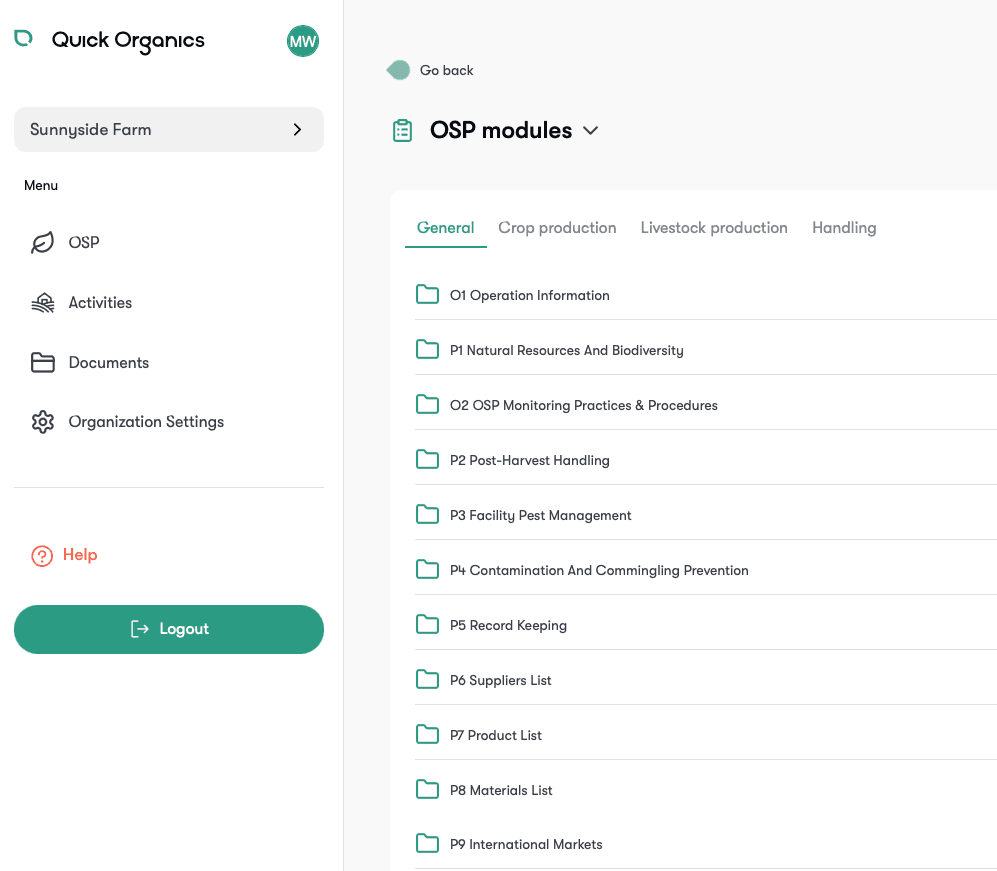
Using skip-logic and modular sections, the Common OSP:
Eliminates irrelevant questions
Reduces confusion
Improves accuracy of responses
Whether on paper or digital, the structure remains consistent. This flexibility ensures that all producers, regardless of operation size or focus, benefit from a tailored certification experience that meets their specific needs.
Step 3 — Shared Use Across the System
The same OSP supports:
Producers completing applications
Inspectors preparing for inspections
Certifiers reviewing compliance
This shared structure reduces variation and improves communication.
Technology Is Optional
The Common OSP can be:
Printed
Used as a PDF
Integrated into certifier systems
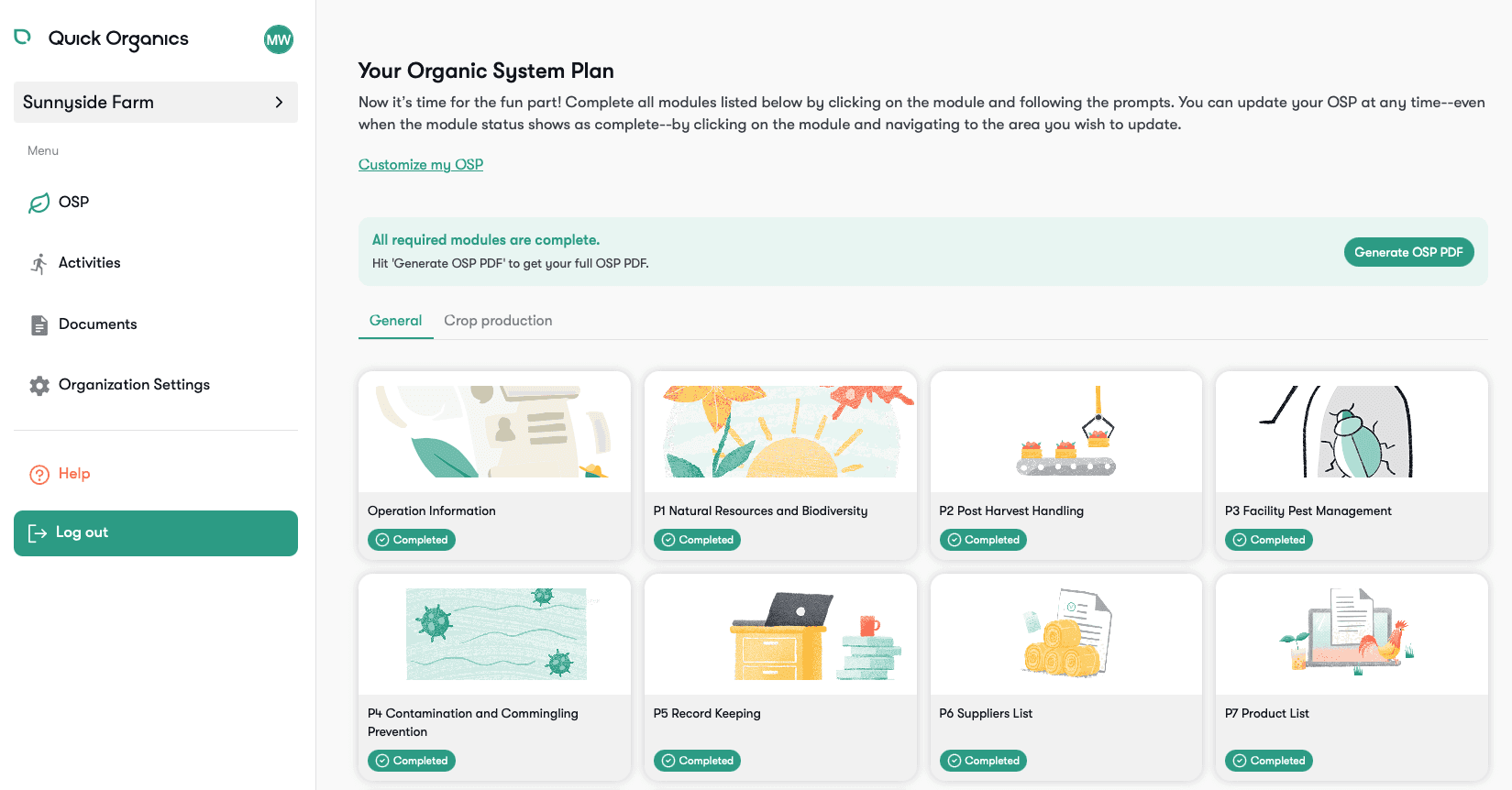
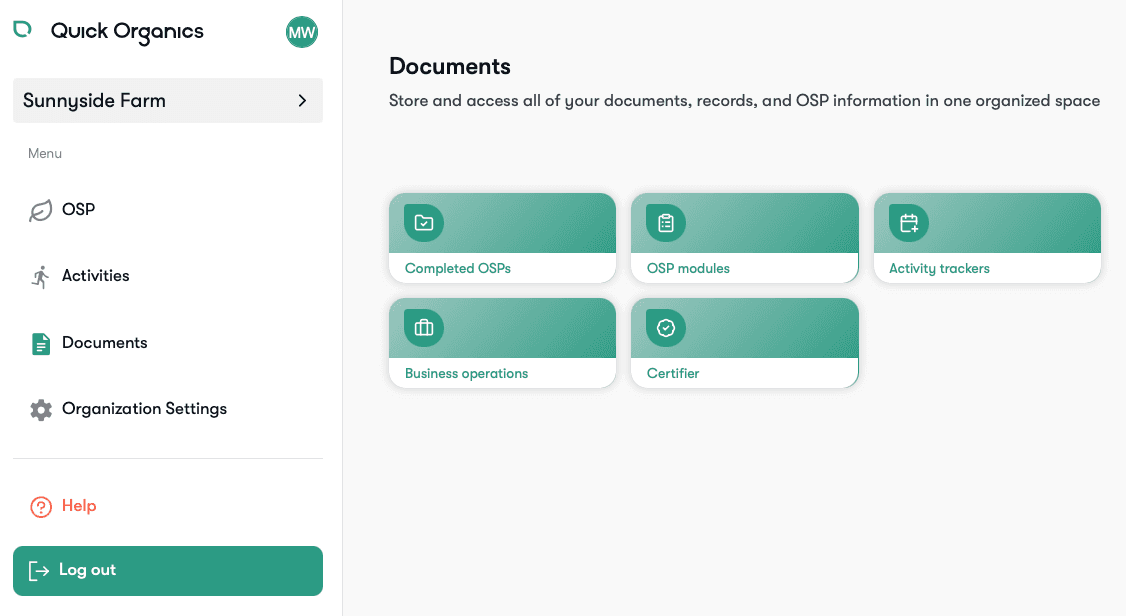
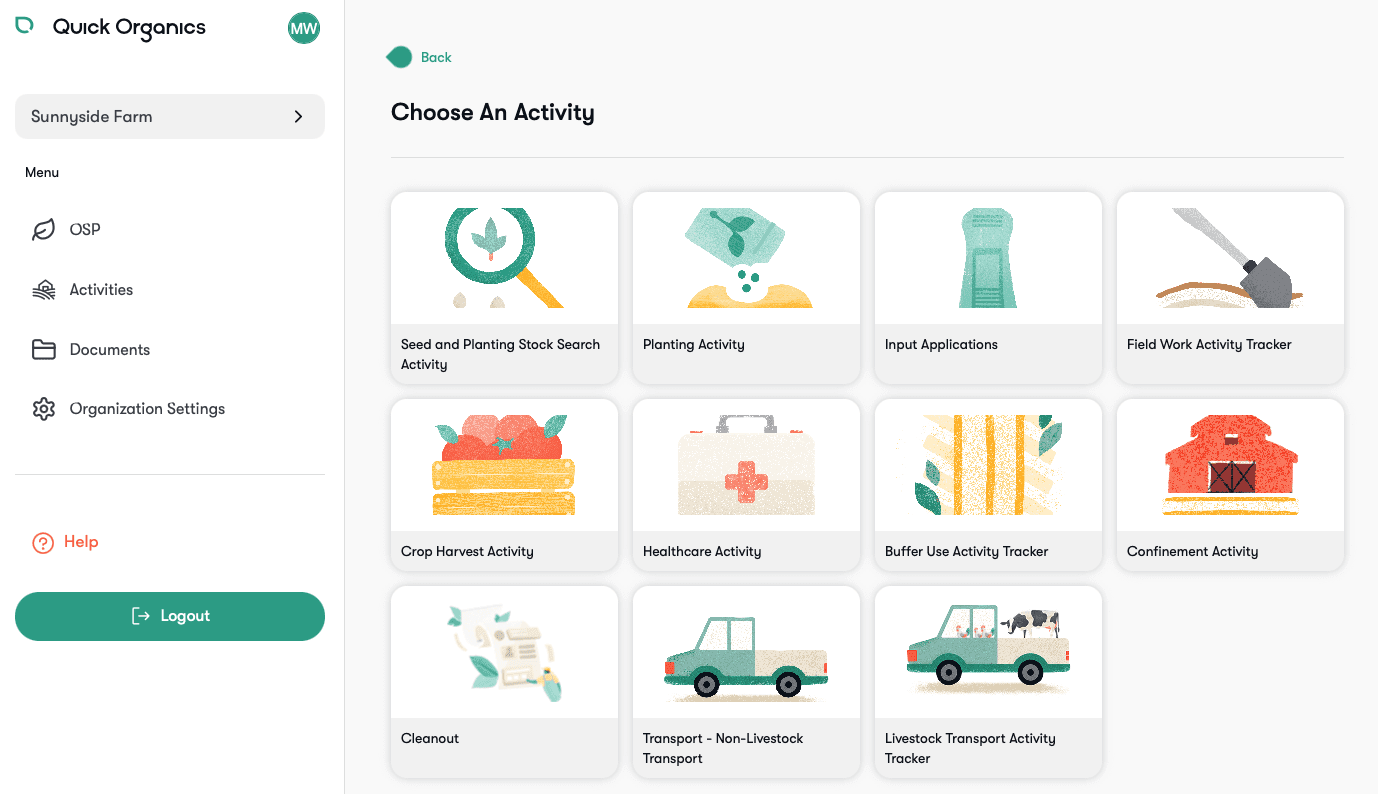
Implemented through third-party tools like Quick Organics
Technology adoption is voluntary. Data ownership and privacy depend on the provider’s terms — not the Common OSP itself. Digital platforms can also provide producers with insights into their compliance activities, helping them make more informed operational decisions.


Try Quick Organics Today
Get started for free.