Common OSP: Streamline US Organic Certification with Quick Organics
What Is the Common Organic System Plan?
The Common Organic System Plan (Common OSP) is a standardized, risk-based Organic System Plan designed to bring greater clarity, consistency, and efficiency to organic certification.
Developed collaboratively with input from organic certifiers, inspectors, producers, and industry partners, the Common OSP establishes a shared baseline structure for documenting organic practices in alignment with USDA National Organic Program (NOP) regulations.
It is not a regulation, not a mandate, and not proprietary software. It is a public OSP framework intended to be used on paper, in PDFs, within certifier systems, or through third-party platforms such as Quick Organics.
By standardizing how organic practices are documented, the Common OSP reduces the time and complexity of organic certification for producers — early testing showed completion time drop from approximately 40 hours to just 10. For certifiers, it means cleaner submissions, faster reviews, and more consistent inspector preparation. For inspectors, it provides a shared reference point that supports more efficient, risk-based oversight.
A Shared Foundation for Organic Certification
Today, Organic System Plans vary widely between certifiers. While all must meet the same regulations, the structure, depth, and interpretation of OSP questions often differ, creating unnecessary confusion and rework.
The Common OSP provides:
A consistent question set aligned with NOP regulations
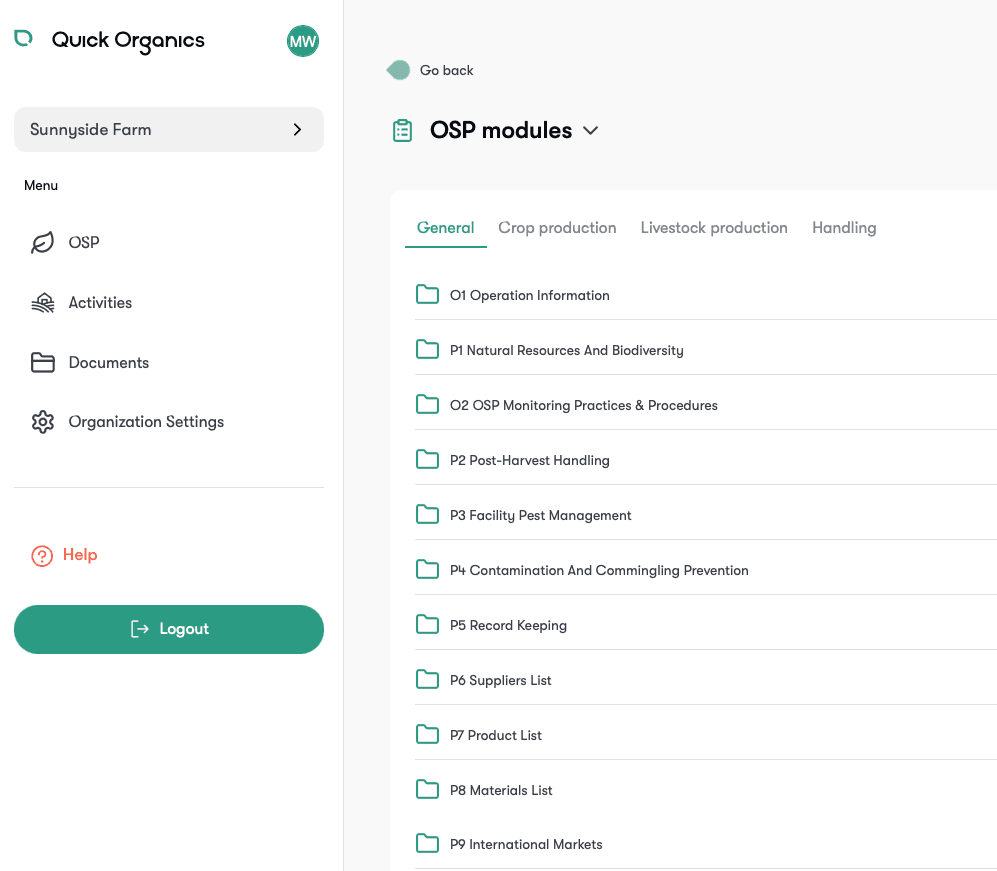
A modular, scope-based structure
A clearer path for documenting compliance
A shared foundation that the entire organic community can build upon
What the Common OSP Is — and Is Not
The Common OSP is:
A standardized OSP template aligned with USDA organic regulations
Designed to support risk-based certification
Free and soon to be publicly available as an NOP document
Usable by any certifier, producer, or inspector
The Common OSP is not:
A requirement imposed on certifiers or operators
A replacement for certifier authority or accreditation
A technology mandate
Owned by Quick Organics or any private company
How Quick Organics Fits In
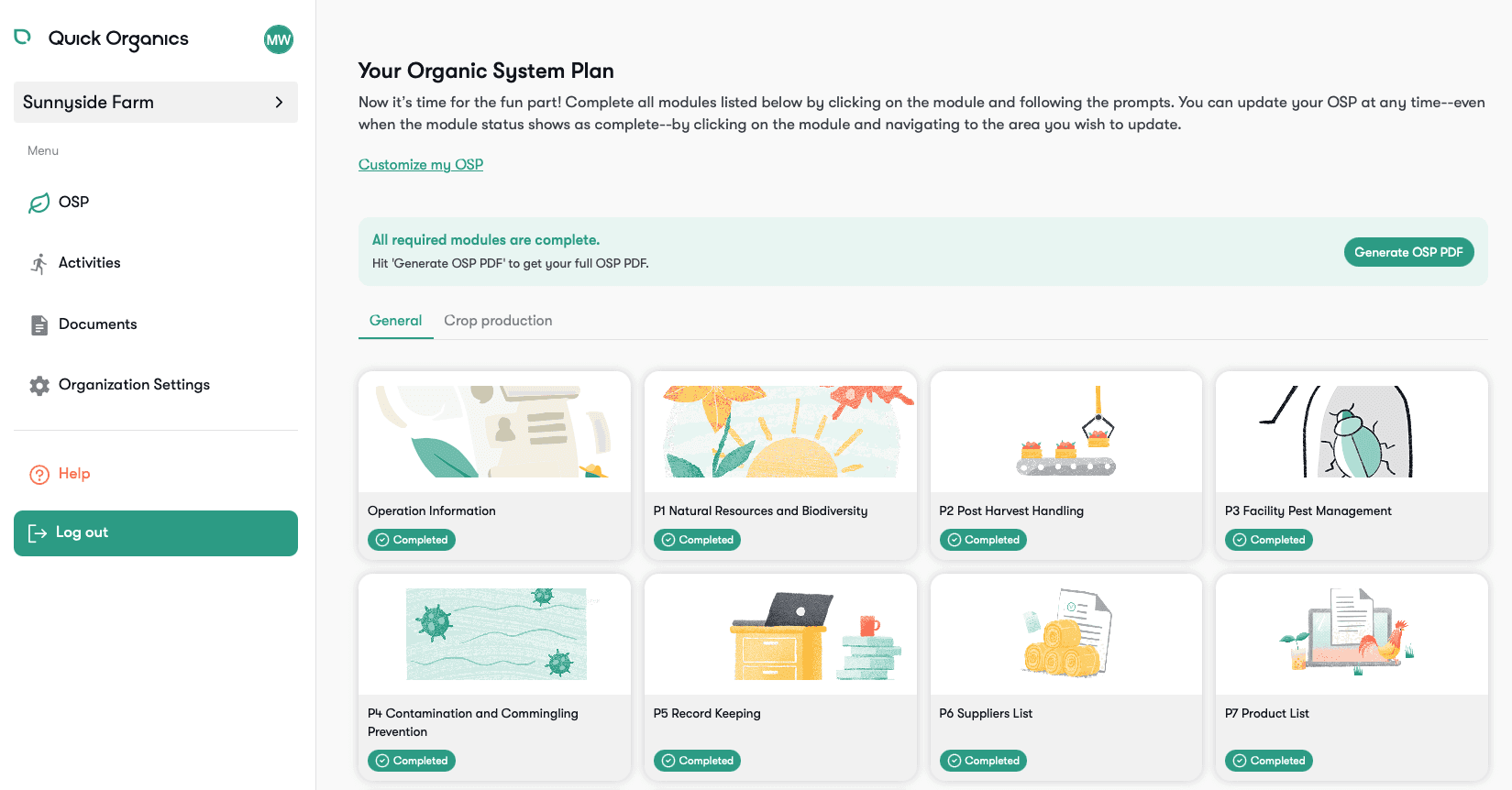
Quick Organics is one possible way to use the Common OSP. Our platform integrates the Common OSP into a digital Certification Assistant that helps operators complete, update, and maintain their OSP more efficiently.
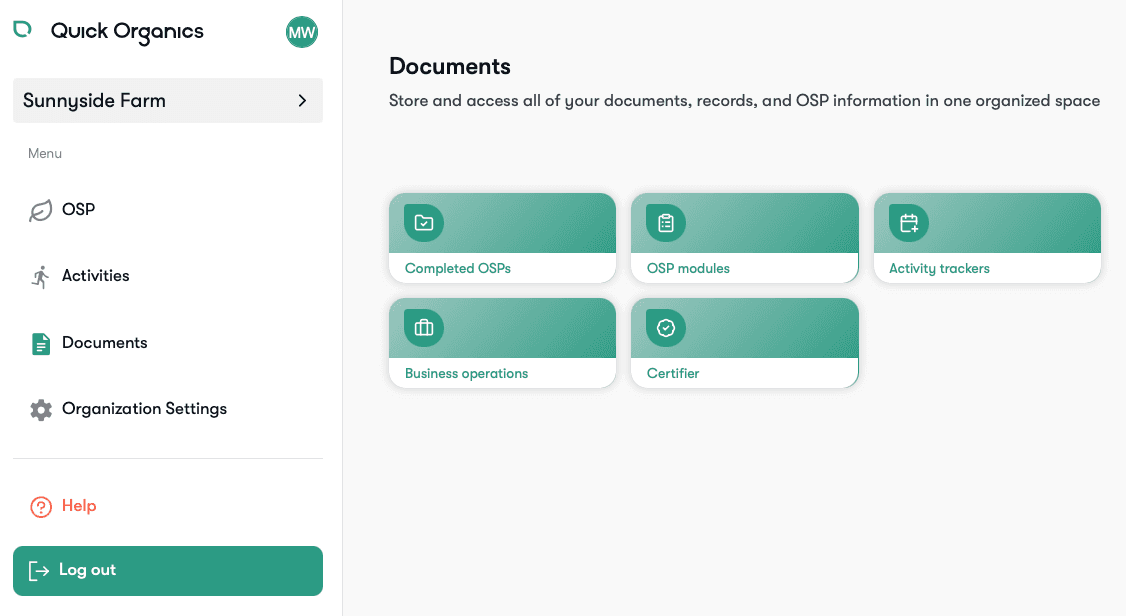
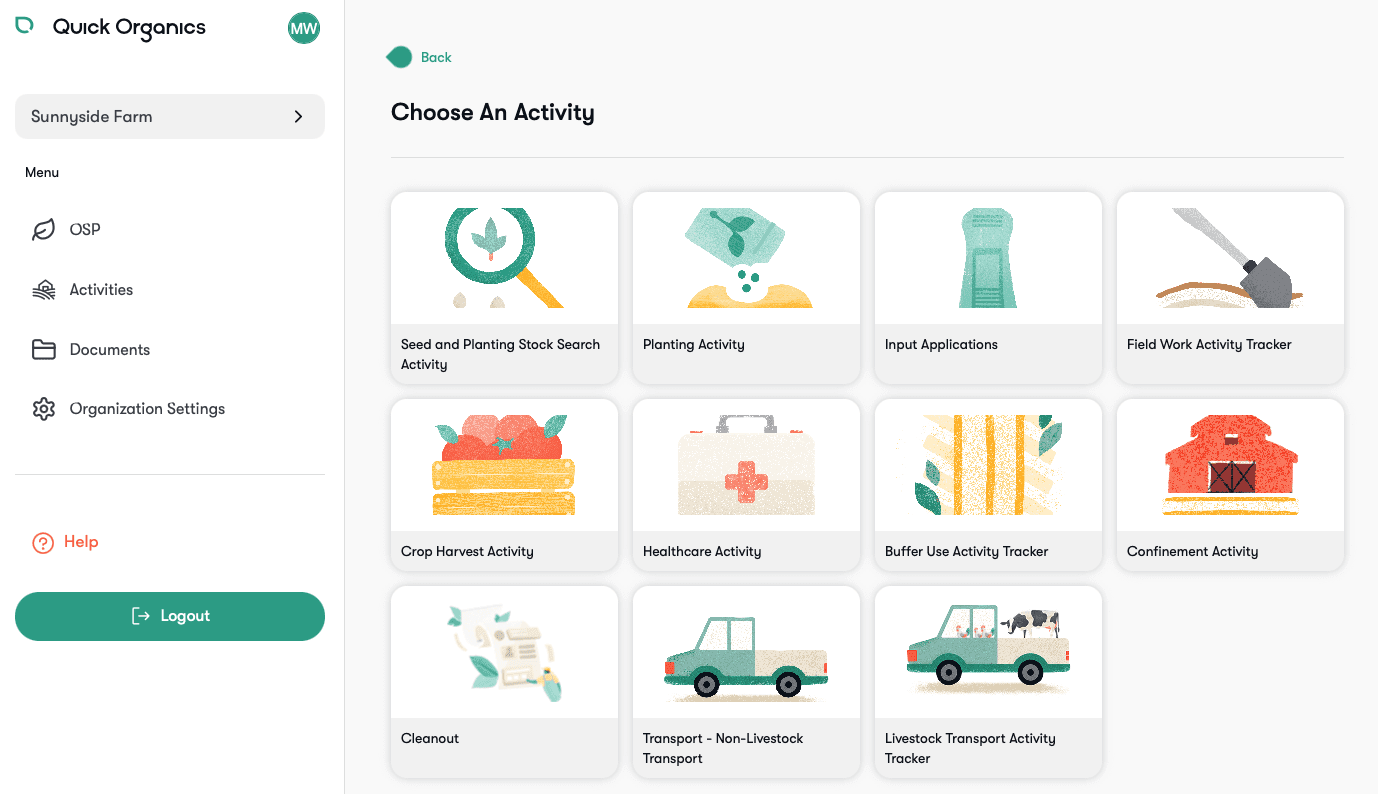
The Common OSP document will itself remain free and public. Subscription fees only apply to optional digital tools such as Quick Organics and includes all you need to achieve and maintain your organic certification, such as recordkeeping, document storage, workflow support, and compliance prompts


Try Quick Organics Today
Get started for free.